
Sapphire Hair Transplant

Sapphire Hair Transplant in Tunisia: Innovative Hair Implant
Sapphire Hair Transplant: An Innovative Technique for Natural Regrowth
The sapphire hair transplant, a major advance in the field of hair implantation, is revolutionizing the way hair loss is treated. This technique uses sapphire tools to make more precise, less invasive incisions, delivering natural, long-lasting results. By minimizing trauma to the scalp, the sapphire hair transplant allows for quick recovery and greater comfort for patients. In this article, discover the benefits of this method, how it works, and why it is increasingly favored by those who want to regain a full, attractive head of hair.
- More precise incisions with a sapphire blade
- Quick and comfortable recovery
- Natural, long-lasting results
- Technique suited to all areas of the scalp
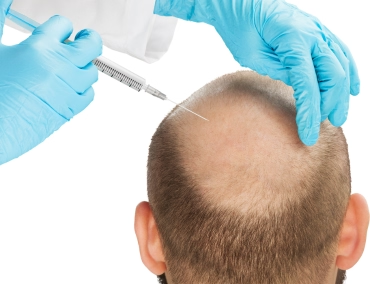
Get a price estimate for your surgery!
Fill out the form below quickly.
FAQ
The Sapphire hair transplant is an advanced hair transplantation technique that uses sapphire blades to make the incisions. This method allows greater precision, finer incisions, and faster recovery.
The goal of the Sapphire hair transplant is to restore hair density by implanting follicles in thinning areas of the scalp while minimizing scarring and optimizing healing.
The price of a Sapphire hair transplant in Tunisia ranges between €3800 and €4000, depending on the number of grafts to be transplanted and the technique used. For more information about the Sapphire hair transplant and to get a personalized quote, click here to request a free quote.
- Finer, more precise incisions thanks to sapphire blades
- Less scarring and faster recovery
- Natural result with even density
- Suitable for all areas of the scalp
Steps of the procedure
1.Preparing the donor area: shaving of the donor area (often the back of the head) and local anesthesia.
2.Follicle harvesting: extraction of follicles using the FUE technique.
3.Incisions with a sapphire blade: use of a sapphire scalpel for precise incisions.
4.Follicle implantation: insertion of the follicles one by one into the incisions.
Anesthesia
Local anesthesia, ensuring a pain-free procedure.
Duration
The procedure lasts between 4 and 8 hours, depending on the number of grafts.
What to expect after the procedure
After the transplant, redness and mild swelling may appear, but they disappear within a few days. Scabs form around the follicles and fall off after about 10 days.
Recommendations/tips
- Avoid touching or scratching the transplanted area.
- Use the prescribed products to promote healing.
- Do not expose the area directly to the sun during the first few weeks.
Even though sapphire hair transplantation is generally considered a safe and effective procedure, some risks can arise. The most common side effects include mild swelling, bruising and slight scalp pain that may occur after the operation. There is also a risk of infection if aftercare instructions are not followed properly. Occasionally, in rare cases, implanted follicles may fail to take, which could result in reduced density in the treated area. It is very important to choose a qualified, experienced professional to limit these risks and to have realistic expectations about the results. A consultation before the procedure will also help you discuss any concerns and put together a personalized plan for a better recovery.
The classic FUE (Follicular Unit Extraction) method and the sapphire blade method are two ways of performing hair transplants, but they differ mainly in the tool used to make the incisions. In classic FUE, rotating steel instruments are used to remove the hair follicles, which can sometimes cause scalp injuries and a longer recovery time. Sapphire blade FUE, on the other hand, uses sapphire tools, which allow more precise and finer incisions. This helps reduce bleeding, minimize scarring and speed up the healing process. In addition, the sapphire method allows the follicles to be placed more accurately, which improves the final appearance. In short, although both techniques work well, sapphire blade FUE is often preferred because of its advantages in comfort and visual results.
Sapphire hair transplantation can be combined with other cosmetic procedures, such as a beard transplant, an eyebrow transplant or a classic FUE hair transplant, to offer a complete transformation of the face and scalp. A beard transplant is ideal for those who want denser, more even facial hair, while an eyebrow transplant redefines the contour of the face by adding depth and structure. Classic FUE hair transplantation, although less advanced than the sapphire method, remains a popular option for patients wishing to restore their hair. By combining these procedures, patients can not only improve their overall appearance but also boost their self-confidence. It is essential to consult a specialist to develop a personalized plan that meets each person's aesthetic needs.
Description of the result
The immediate result is visible, but a temporary loss of the transplanted hair may occur in the weeks following the operation. Permanent regrowth begins after 3 to 4 months.
How the result evolves
The final result is visible after 6 to 12 months, with restored hair density and a natural-looking head of hair.

Welcoming our new patients
We are welcoming
new patients
A brief statement describing the purpose and mission of the clinic. This may include a commitment to patient care and community health.

more services
You may also like other services

Beard Transplant
Medical services required on the spot, e.g. for medical
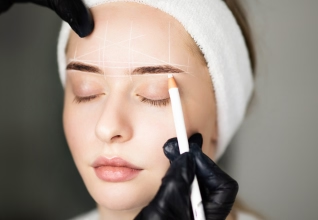
Eyebrow Transplant
Medical services required on the spot, e.g. for medical

Regenera Activa
Medical services required on the spot, e.g. for medical