
Retinal Detachment

Retinal Detachment Surgery Tunisia: Causes, Treatments, and Recovery
What Is a Retinal Detachment?
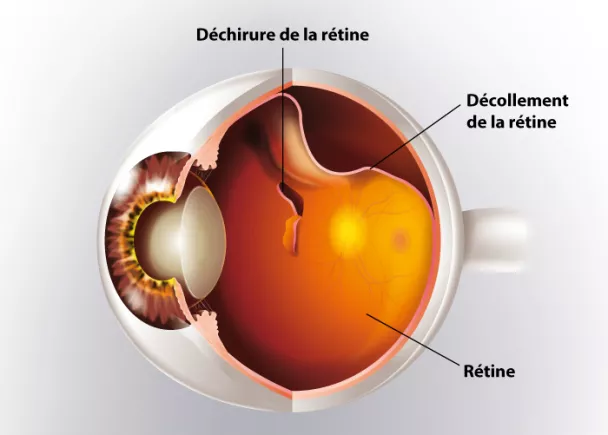
The retina is a thin membrane lining the back of the eye, essential for vision. A retinal detachment occurs when this membrane separates from the wall of the eye, preventing light signals from being properly transmitted to the brain. Without treatment, it can lead to irreversible vision loss.
What Are the Main Causes of Retinal Detachment?
The main causes of retinal detachment are varied. The most common is a retinal hole or tear, which allows fluid from inside the eye to seep under the retina and lift it away. Other factors can also promote its onset, such as eye injuries, high myopia that weakens and stretches the retina, a family history of retinal detachment, previous eye surgery (particularly cataract surgery), and natural aging of the vitreous, which causes excessive traction on the retina.
- Reattachment of the retina
- Injection of gas or silicone oil
- Laser or cryotherapy treatment
- Use of cutting-edge equipment
Get a price estimate for your surgery!
Fill out the form below quickly.
From a 30% chance to regained vision - Ophthalmology success with Mondial Santé
FAQ
The warning signs of a retinal detachment include the sudden appearance of floaters, flashes of light, a black veil or shadow in the field of vision, and a rapid decline in vision. These symptoms call for an urgent consultation to preserve your vision.
Retinal detachment surgery relies on several complementary techniques. Vitrectomy removes the vitreous and relieves the traction on the retina, while the retina is reattached to the wall of the eye using precise microsurgical techniques. Injection of gas or silicone oil holds the retina in position during healing, and laser or cryotherapy treatment seals retinal tears to stabilize the edges. These procedures are performed with cutting-edge equipment, followed by personalized post-operative care to optimize visual recovery.
The surgery generally lasts between 30 and 90 minutes, under local or general anesthesia depending on the case. It can be performed as an outpatient procedure or may require a short hospital stay. After the operation, visual recovery varies depending on the severity of the detachment and how quickly it is treated.
After surgery, it is common to experience temporary blurred vision or a foreign-body sensation. You may need to maintain certain positions if gas has been injected. Regular follow-up makes it possible to monitor healing, avoid complications, and maximize visual recovery.
The results of surgery depend on how quickly treatment is given and the extent of the detachment. In the majority of cases, the procedure reattaches the retina and stabilizes vision, although complete recovery of visual acuity is not always possible if the macula has been affected. Complications are rare but may include a recurrence of the detachment or a secondary cataract. Regular follow-up helps optimize the prognosis and prevent long-term complications, giving patients the best chance of preserving their vision.
Retinal detachment surgery is very effective, with an overall success rate of between 85% and 95% after a first procedure. This rate can be even higher after a second procedure if necessary. Success depends mainly on how quickly treatment is given, the extent of the detachment, and the condition of the macula. Early surgery and rigorous post-operative follow-up help optimize the chances of recovering vision and preventing long-term complications.
A brief statement describing the purpose and mission of the clinic. This may include a commitment to patient care and community health.

Welcoming our new patients
We are welcoming
new patients

more services
You may also like other services

Refractive Surgery in Tunisia
Medical services required on the spot, e.g. for medical
Cataract Surgery Tunisia
Medical services required on the spot, e.g. for medical
Corneal Transplant
Medical services required on the spot, e.g. for medical