
Poorly Healed Fracture and Effective Solutions
05 Feb
Poorly Healed Fracture and Effective Solutions
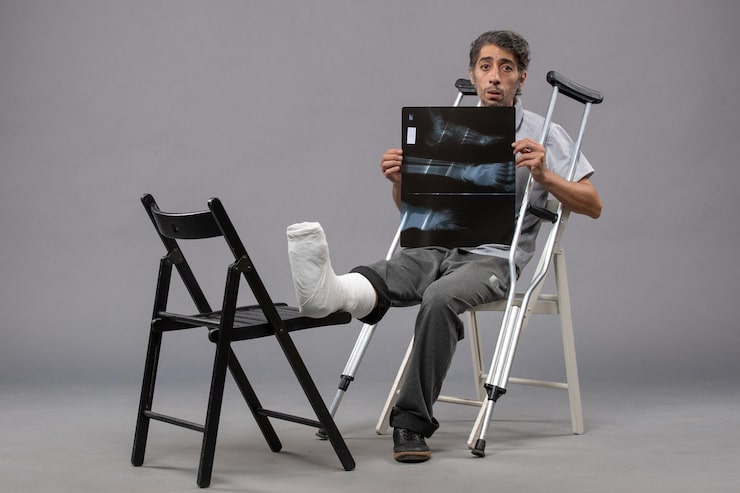
A bone fracture is a common injury that can affect anyone, at any age. In most cases, prompt and appropriate care leads to complete healing. However, when a bone is poorly treated, poorly immobilized or insufficiently monitored, the consequences can be serious and long-lasting. A poorly healed fracture can cause chronic pain and functional limitations, and sometimes requires another surgery. Faced with these complications, medical solutions exist, notably thanks to the expertise of Mondial Santé in Tunisia, recognized as the best medical tourism agency in Africa.
Get a price estimate for your surgery!
Fill out the form below quickly.
Understanding how a fracture heals
Fracture healing is the natural process by which bone repairs itself after a break. This phase unfolds in several biological stages and can last from a few weeks to several months depending on the patient’s age, the type of fracture and the quality of care. One question patients often ask is: how long does fracture pain last? In general, the pain gradually decreases, but it should not remain intense after the normal healing phase.
When everything goes smoothly, the bone regains its original strength and function. If the process is disrupted, however, you may end up with a fracture that does not heal, which leads to many complications.
The causes of poor bone healing
Poor bone healing can have several origins. The most common causes include insufficient immobilization, a displaced fracture that was not properly realigned, infection, smoking, certain chronic diseases, or inappropriate rehabilitation. In these situations, the bone heals crookedly or remains unstable.
Patients often feel pain during bone healing, which can be normal at first. However, when the pain persists or worsens, it may be a sign of a serious problem. Pain after fracture healing is generally abnormal and should raise concern.
The consequences of a poorly healed fracture
The consequences of a poorly treated fracture can be disabling. A poorly healed fracture can cause a visible deformity of the limb, loss of mobility, muscle weakness and everyday functional difficulty. In some cases, the patient develops a limp, restricted joint movement or an inability to return to work.
Pain after fracture healing is one of the most common symptoms. This chronic pain affects quality of life, disrupts sleep and can lead to dependence on painkillers. When a fracture does not heal properly, it is sometimes called a nonunion (pseudarthrosis), a situation where the bone remains mobile instead of becoming solid.
When a fracture does not heal: what should you do?
In the case of a fracture that does not heal, simple monitoring is no longer enough. Specialized care is essential. Treatment depends on the degree of poor bone healing and may include corrective surgery, the placement of plates or nails, a bone graft or advanced techniques to stimulate healing.
In this context, it is essential to consult experienced specialists with modern technology. This is where medical tourism makes perfect sense, particularly in Tunisia.
Why choose Tunisia to correct a poorly healed fracture?
Tunisia has become a leading destination for orthopedics and trauma care. The country has highly qualified surgeons trained in Europe, and modern medical facilities that meet international standards. Treatments are offered at significantly more affordable costs than in Europe or North America, with no compromise on quality.
Patients suffering from pain during bone healing or from after-effects of a poorly treated fracture find tailored, personalized solutions in Tunisia.
Mondial Santé: excellence in medical tourism in Africa
Mondial Santé stands out as the best medical tourism agency in Africa, particularly for the care of complex orthopedic conditions. Specialized in supporting international patients, the agency offers a complete and secure medical journey.
With Mondial Santé, every patient receives a thorough evaluation of their situation, whether it is a poorly healed fracture, poor bone healing or a fracture that does not heal. The agency works with the best orthopedic surgeons in Tunisia to guarantee optimal results.
Comprehensive, personal support
Mondial Santé does not stop at organizing care. The agency manages the entire medical stay: consultations, tests, surgery, hospitalization, rehabilitation, accommodation and transfers. This comprehensive support lets patients focus fully on their recovery.
The Mondial Santé teams fully understand concerns about pain after fracture healing or the question how long does fracture pain last. They provide attentive follow-up before, during and after treatment, in order to optimize recovery and prevent any recurrence.
Regaining a pain-free life with appropriate care
Living with a poorly treated fracture is not inevitable. Thanks to medical advances and the expertise of Tunisian specialists, it is now possible to correct the after-effects of poor bone healing and regain normal mobility. Prompt, specialized care is the key to avoiding irreversible complications.
By choosing Mondial Santé in Tunisia, patients choose safety, competence and medical excellence. Whether to relieve pain during bone healing, treat a fracture that does not heal or correct a bone deformity, Mondial Santé offers reliable and accessible solutions, restoring hope and quality of life to thousands of patients across Africa and around the world.
Fracture after-effects: what solutions are there after a poorly healed fracture?
Fracture sequelae can appear when a bone has not healed properly or when the surrounding tissues and joints have been lastingly affected. Persistent pain, limited movement, deformity, a difference in limb length or functional discomfort can then make daily life difficult. Management depends on the location of the fracture, how long ago it occurred, the state of healing and the severity of the symptoms. A clinical and radiological assessment is essential before considering surgery.
When conventional treatments are not enough, orthopedic surgery may sometimes be proposed to correct poor healing or restore function to the limb. In Tunisia, Mondial Santé supports French-speaking patients throughout their medical journey, from the review of their file to the organization of their stay. This support includes referral to a suitable medical team, the preparation of a free quote and complete care on site. The decision to operate remains a medical one, however, and must be made after a personalized review of your file.
FAQ on the consequences of a poorly treated fracture
Can a poorly healed fracture still be treated?
In some cases, yes. Surgical correction may be considered depending on the nature of the healing, the functional impairment and the patient’s general health. Only an orthopedic surgeon can determine the appropriate solution after an assessment.
What are the main consequences of a poorly treated fracture?
They can include chronic pain, joint stiffness, deformity or reduced mobility. Their severity varies depending on the bone involved and the conditions in which it healed.
To find out about your care options in Tunisia, send your file to Mondial Santé and request your free quote today.