
Hip Replacement: An Orthopedic Revolution
24 Apr
Hip Replacement: An Orthopedic Revolution
Hip replacement is a major medical advance that improves the quality of life of millions of people around the world. This surgery allows patients suffering from chronic pain and reduced mobility to regain comfort and independence. This article offers a complete overview of hip replacement: its indications, the different types, how the operation is performed, the associated risks, and the rehabilitation process.
What is a hip replacement?
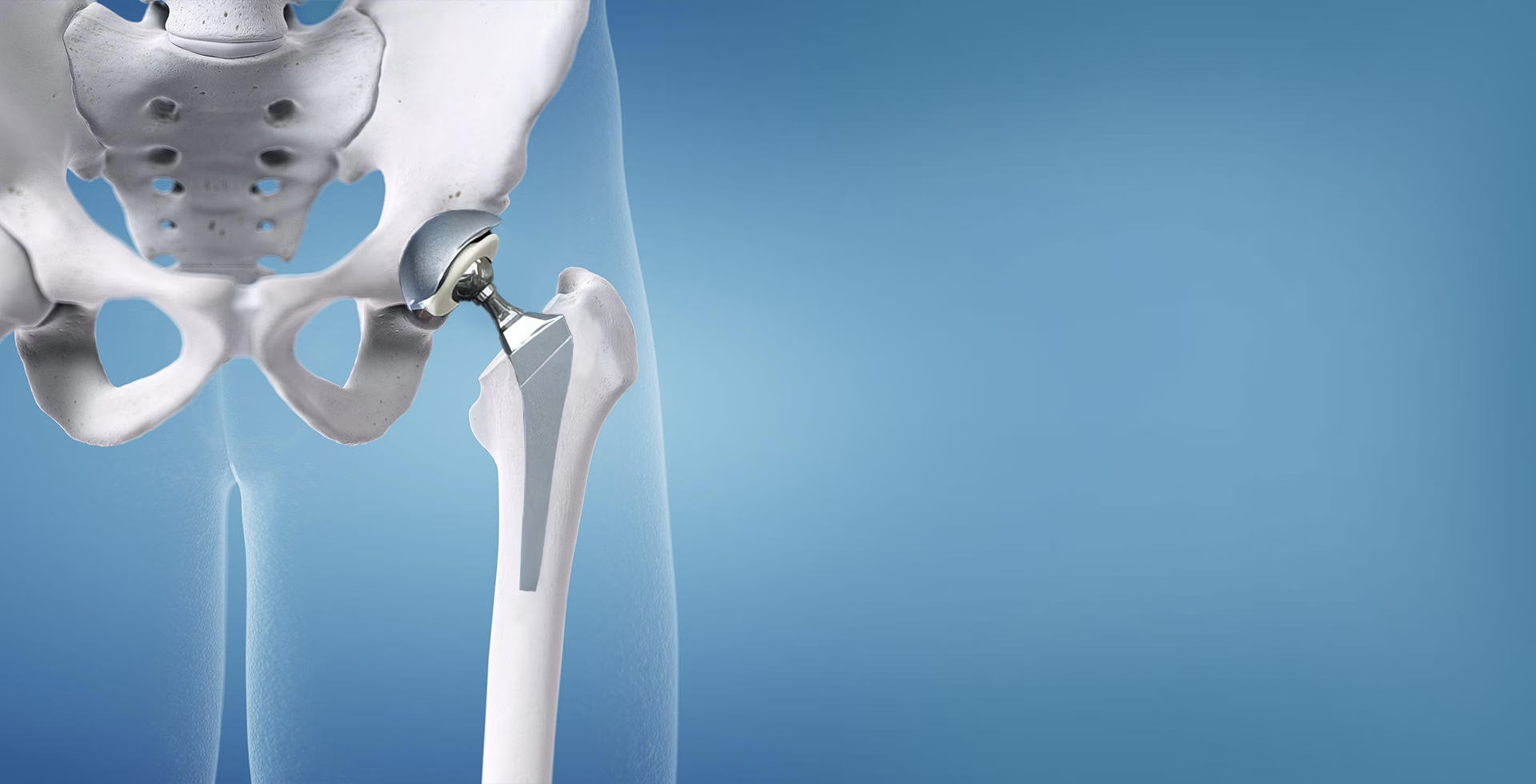
A hip replacement is a medical device surgically implanted to replace the hip joint, which is made up of the head of the femur and the acetabulum (the socket of the pelvis). When a hip is irreversibly damaged, the prosthesis restores joint mobility and relieves pain.
Get a price estimate for your surgery!
Fill out the form below quickly.
When is a hip replacement needed?
The main indications for total hip arthroplasty are:
- Osteoarthritis: This is the most common cause. This degenerative disease gradually destroys the joint cartilage.
- Rheumatoid arthritis: A chronic inflammatory disease of the joints.
- Femoral neck fractures: Especially in older people.
- Necrosis of the femoral head: Death of the bone due to an interruption of its blood supply.
- Congenital malformations or hip dysplasia.
Disabling pain, loss of independence, joint stiffness and the failure of drug treatments are the main criteria that justify surgery.
The different types of prostheses
There are several types of hip prostheses, chosen according to the patient's age, physical activity and bone condition.
- Total hip replacement (THR): This is the most common. It replaces both the femoral head and the hip socket.
- Intermediate (or resurfacing) prosthesis: Less invasive, it preserves part of the femur bone. It is reserved for young patients with good bone quality.
- Partial prosthesis (or hemiarthroplasty): It replaces only the femoral head. It is often indicated for femoral neck fractures where the acetabulum is not affected.
Materials used
The components can be made from various materials:
- Metal on metal
- Ceramic on ceramic
- Ceramic on polyethylene
- Metal on polyethylene
Each combination has its own advantages and disadvantages in terms of durability, friction and the risk of allergic reactions.
The surgical procedure
Preparation
Before the operation, a complete assessment is carried out: blood tests, X-rays, cardiac work-up and an anesthesia consultation. Physical preparation may be recommended to strengthen the muscles around the hip.
How the operation is performed
The surgery lasts between 1 and 2 hours. It can be performed under general anesthesia or spinal anesthesia (lumbar epidural). The surgeon removes the damaged joint and implants the prosthesis.
Surgical approaches
There are several surgical approaches:
- Posterior approach: Frequently used, it provides good exposure.
- Anterior approach: Less invasive, it promotes faster recovery.
- Lateral approach: Lower risk of dislocation, but more muscle damage.
Risks and complications
Like any surgery, hip replacement carries risks:
- Infection: Rare, but serious.
- Dislocation of the prosthesis: Especially in the first few months.
- Deep vein thrombosis: Hence the importance of anticoagulant treatment.
- Loosening: In the long term, the prosthesis can detach from the bone.
- Leg length discrepancy
These complications are rare, however, especially with modern techniques and good follow-up.
Post-operative rehabilitation
Hospital stay and the first days
After the surgery, the patient is monitored in the hospital for 3 to 5 days. Mobilization begins the very next day with the help of a physical therapist. The goal is to walk again quickly to avoid complications (phlebitis, stiffness).
Returning home or going to a rehabilitation center
What happens next depends on the patient's age, general condition and independence. Some go home with home help and a physical therapy program, while others receive care in a specialized center.
Length of rehabilitation
Allow about 6 to 12 weeks to regain full independence. Activities such as driving or returning to work can be considered after 4 to 8 weeks, depending on the type of activity.
Resuming activities
High-impact sports (running, tennis) are not recommended. On the other hand, swimming, cycling and walking are recommended to maintain mobility and muscle strength.
The lifespan of a prosthesis
Current prostheses have an estimated lifespan of 15 to 25 years. Constant progress in materials and surgical techniques is extending this longevity.
In some cases, a revision (replacement of the prosthesis) is necessary, especially in young or very active patients.