
Loose Dental Crown: Our Solution
25 Feb
Loose Dental Crown: Our Solution
A dental crown is designed to protect, strengthen and restore a weakened tooth. When it starts to move, it can cause significant discomfort, a loss of confidence and sometimes even pain. This problem, far from rare, needs prompt attention to avoid more serious complications. Today, more and more patients are choosing dental surgery in Tunisia to benefit from quality care at competitive prices.
Get a price estimate for your surgery!
Fill out the form below quickly.
Why does a dental crown become loose?
A loose dental crown can have several causes. Understanding the cause is essential to choosing the most suitable solution.
1. Dental cement failure
The crown is attached to the natural tooth (or to a post) with a specific cement. Over time, this cement can wear down, crack or lose its effectiveness. Bacterial infiltration and temperature changes can also weaken the bond.
2. Underlying decay
A cavity can develop under the crown without being immediately visible. This deterioration weakens the supporting tooth, which can cause the prosthesis to move.
3. Fracture of the tooth or post
If the natural tooth is too badly damaged or the post is fractured, the stability of the crown is compromised.
4. Implant problem
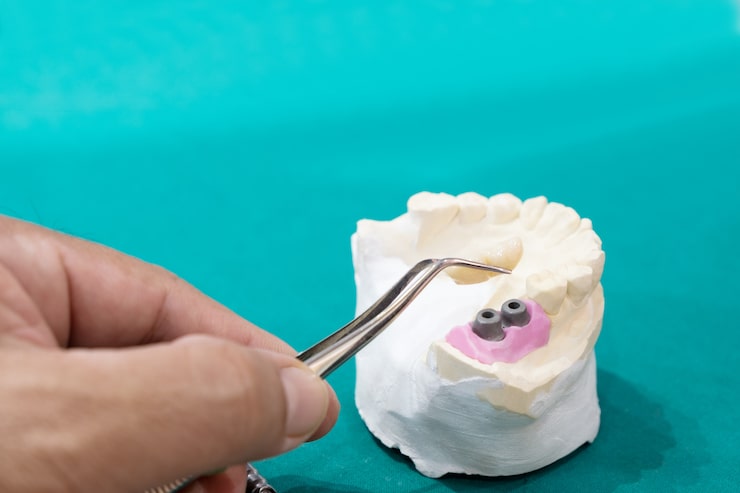
When the crown is placed on an implant, the movement may come from a loosened implant screw or a problem with osseointegration.
Whatever the cause, it is strongly advised not to leave a loose crown untreated. Prompt treatment often makes it possible to avoid extracting the tooth.
The risks of a loose dental crown
Ignoring a loose crown can lead to:
-
A gum infection
-
Persistent bad breath
-
Pain when chewing
-
A complete fracture of the tooth
-
Permanent loss of the tooth
The later the treatment, the more complex and costly the procedure is likely to be.
Possible solutions
The treatment depends on the diagnosis made by the dentist.
Simple re-cementing
If the underlying tooth is healthy and the crown is intact, a simple cleaning followed by re-sealing may be enough.
Crown replacement
If the crown is damaged or poorly fitted, it may need to be replaced with a new, better-adapted prosthesis.
Treatment of decay
If there is decay, the dentist will first need to remove the infection before replacing or remaking the crown.
Surgical solution
When the tooth is too badly damaged or stability can no longer be ensured, a surgical solution may be considered: extraction of the tooth, placement of a dental implant, then fitting of a new implant-supported crown.
This is why dental surgery in Tunisia attracts many international patients.
Why choose dental surgery in Tunisia?
Tunisia has become a leading destination for dental care, particularly for complex surgical procedures.
1. Recognized medical expertise
Tunisian dentists receive rigorous training and use modern technology. Clinics in Tunis, Sousse and Monastir are equipped with state-of-the-art equipment that meets international standards.
2. Competitive costs
Prices are often 40 to 70% lower than in Western Europe, while maintaining a high standard of care.
3. Short waiting times
Unlike in some countries where waiting times can be long, care in Tunisia is quick to obtain, which limits the complications associated with an unstable crown.
4. Organized medical stay
Many providers offer packages that include consultation, surgery, accommodation and transfers, simplifying the patient’s journey.
How does the surgical solution work?
When a loose crown requires surgery, the protocol generally follows several steps:
Step 1: Complete assessment
A clinical and radiological examination is carried out to evaluate the condition of the tooth, the bone and the surrounding tissues.
Step 2: Extraction if necessary
If the tooth cannot be saved, it is extracted under local anesthesia.
Step 3: Implant placement
A titanium implant is inserted into the jawbone. It will replace the root of the tooth.
Step 4: Healing period
The implant must fuse with the bone, a process called osseointegration, which generally takes a few months.
Step 5: Placement of the new crown
Once the implant is fully stable, a custom-made crown is fixed onto it, providing a lasting aesthetic and functional result.
The long-term benefits
Choosing an implant with a new crown offers several benefits:
-
Optimal stability
-
Improved chewing comfort
-
Preservation of the jawbone
-
Natural-looking aesthetic result
-
A lifespan that can exceed 15 to 20 years with good maintenance
Unlike a simple temporary repair, the implant solution is a lasting treatment.
The quality of Tunisian dental clinics
Some private clinics, such as Clinique Pasteur, have modern technical facilities and multidisciplinary teams specialized in oral surgery and implantology. Hygiene standards there are strict and comparable to those of European establishments.
International patients particularly appreciate:
-
Personalized support
-
Transparent quotes
-
The availability of practitioners
-
Post-operative follow-up
Dental tourism: combining care and relaxation
Another significant advantage is the possibility of combining medical treatment with a pleasant stay. The coastal cities offer a setting that is conducive to post-operative recovery, with a mild climate and a wide range of hotel facilities.
However, it is important to put the quality of care before the tourism aspect. The choice of dentist should be based on their experience, their qualifications and verified patient reviews.
Tips to prevent a crown from becoming loose
Even after successful surgical treatment, certain habits are essential:
-
Maintain rigorous oral hygiene
-
Have regular check-ups with your dentist
-
Avoid chewing foods that are too hard
-
Wear a mouthguard if you grind your teeth (bruxism)
Prevention remains the best protection against future complications.
A loose dental crown should never be taken lightly. Whether it is a simple loosening or a deeper problem requiring surgery, a prompt diagnosis is essential. Dental surgery in Tunisia is today a reliable, affordable and safe solution for regaining a stable and attractive smile.
Thanks to modern facilities, qualified practitioners and controlled costs, Tunisia stands out as a top destination for effectively treating an unstable crown, especially when a dental implant becomes necessary. Acting quickly not only helps preserve your oral health, but also restores everyday comfort and confidence.