
What Is Scoliosis?
27 May
What Is Scoliosis?
Scoliosis is a deformity of the spine that causes an abnormal curvature. Instead of following a straight line, the spine takes the shape of an “S” or a “C.” This condition can occur at any age, although scoliosis is most often diagnosed in children and teenagers during the rapid growth of puberty. While some people may have only mild symptoms, scoliosis can sometimes lead to serious complications if it is not diagnosed and treated in time. In this article, we will explore the different aspects of scoliosis, including its types, causes, symptoms, and the treatment options available.
1. Types of Scoliosis
There are several types of scoliosis, each with its own causes and characteristics:
- Idiopathic scoliosis: This is the most common type of scoliosis, accounting for about 80% of cases. The term “idiopathic” means that the cause is unknown. This form generally develops during adolescence, although cases can occur at any age. It can be divided into three subcategories according to the age of onset:
- Infantile scoliosis: Diagnosed in children under 3 years old.
- Juvenile scoliosis: Occurs in children between 3 and 10 years old.
- Adolescent scoliosis: The most common form, it appears in teenagers between 10 and 18 years old.
- Congenital scoliosis: This type is present from birth and results from a malformation of the spine during fetal development. It can be caused by abnormalities in the formation of the vertebrae.
- Neuromuscular scoliosis: This type of scoliosis occurs as a result of muscle or nerve disorders, such as cerebral palsy, muscular dystrophy, or spina bifida. In these cases, scoliosis results from the inability of the muscles or nerves to support the spine properly.
- Degenerative scoliosis: Also called adult scoliosis, it is linked to aging. Degenerative changes in the joints and spinal discs can cause the spine to curve in adults, often as a result of arthritis.
Get a price estimate for your surgery!
Fill out the form below quickly.
2. Causes of Scoliosis
Most cases of scoliosis are idiopathic, which means that no cause has been identified. However, research suggests that genetic factors may play an important role, as scoliosis tends to be more common among members of the same family. Other types of scoliosis, by contrast, have known causes:
- Genetics: A family history of scoliosis can increase the risk of developing it.
- Muscle or nerve problems: Certain conditions such as cerebral palsy, muscular dystrophy, or spinal cord injuries can affect posture and cause scoliosis.
- Trauma or injury: An accident or injury that damages the spine can cause scoliosis.
- Developmental disorders: Certain congenital malformations can lead to scoliosis from birth.
3. Symptoms of Scoliosis
The symptoms of scoliosis vary depending on the severity of the spinal curvature and the patient's age. In young children, scoliosis may be asymptomatic and detected during a routine examination. In other cases, visible symptoms may appear. The main symptoms include:
- A visible curvature of the spine: The “S” or “C” shaped deformity is often visible to the naked eye.
- Uneven shoulders or hips: A difference in height between the shoulders or a hip that seems higher than the other can be a sign of scoliosis.
- Back pain: Although pain is not always present, some patients feel pain in the back, shoulders, or lower back.
- Difficulty standing straight: The person may have trouble maintaining an upright posture because of the curvature of the spine.
- Shortness of breath: In severe cases, when scoliosis significantly deforms the rib cage, lung function can be affected, causing breathing difficulties.
4. Diagnosing Scoliosis
The diagnosis of scoliosis is based on a thorough physical examination, in which the doctor looks for obvious signs of spinal curvature. During the exam, the doctor may ask the patient to bend forward, which makes the deformity easier to see. If scoliosis is suspected, several tests may be performed:
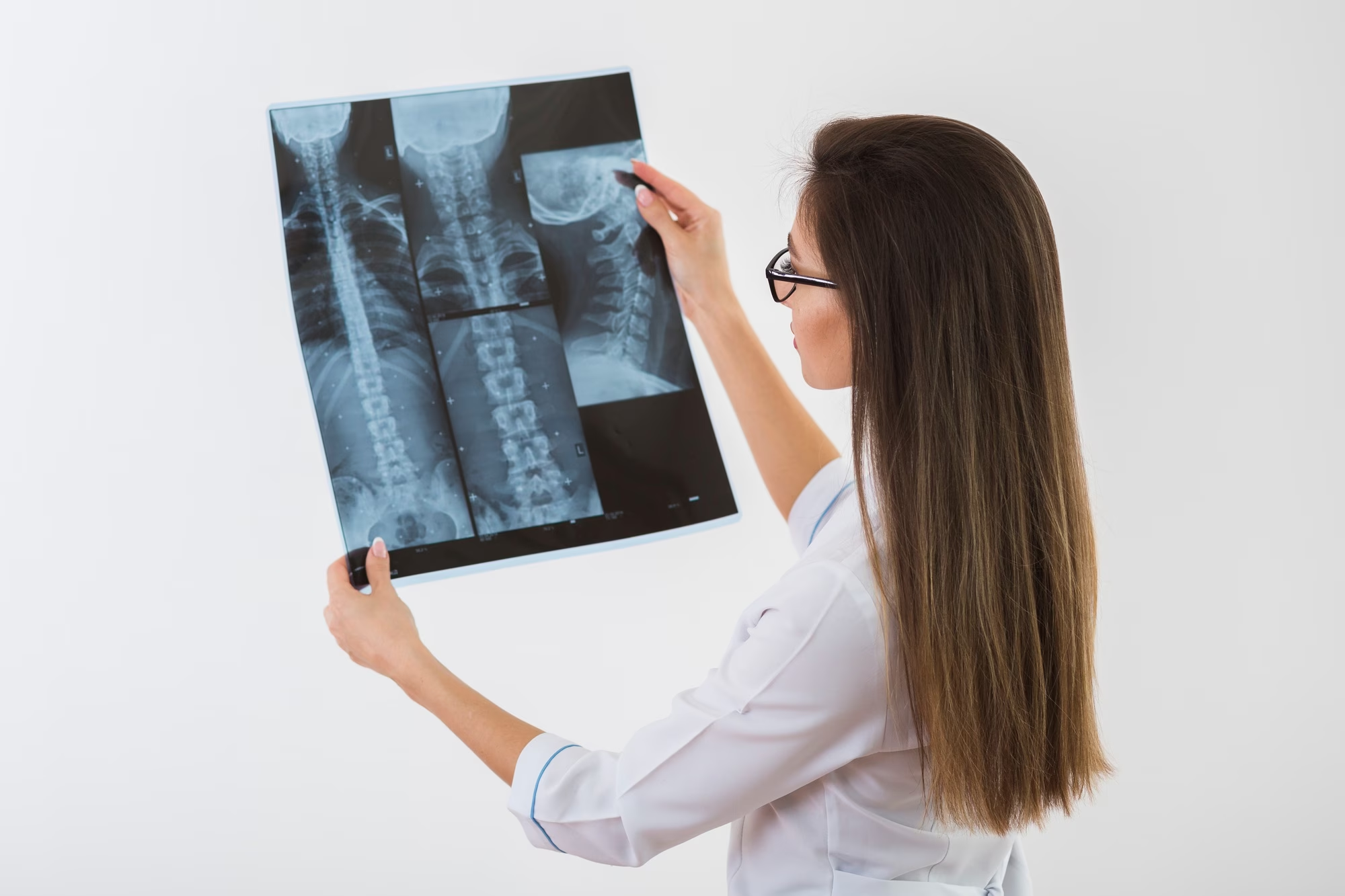
- X-rays: X-rays of the spine make it possible to measure the angle of the curve and determine the severity of the scoliosis.
- MRI: If the scoliosis is accompanied by pain or neurological symptoms, an MRI may be performed to check for abnormalities in the spinal cord.
- CT scan: This test is sometimes used to obtain detailed images of the bones and soft tissues.
5. Treating Scoliosis
The treatment of scoliosis depends on several factors, including the patient's age, the severity of the curve, and the underlying cause of the scoliosis. Treatment options range from monitoring to surgery, depending on individual needs.
- Observation: If the curve is mild and the person has no serious symptoms, regular monitoring may be enough. This allows the doctor to track how the curve changes over time.
- Orthopedic brace: For teenagers whose bones are still growing, a brace can be used to keep the scoliosis from getting worse. The brace does not straighten the curve, but it can prevent it from worsening.
- Physical therapy: Strengthening and stretching exercises can help improve posture and relieve pain.
- Surgery: In severe cases of scoliosis, where the curve is pronounced and does not respond to other treatments, surgery may be considered. The most common procedure is spinal fusion, in which two or more vertebrae are joined together to stabilize the spine.
6. Prevention and Follow-Up
Although it is not possible to prevent scoliosis in most cases, early detection is essential to keep the condition from worsening. Screening examinations carried out during childhood and adolescence are important for identifying scoliosis at an early stage. Once it has been diagnosed, regular follow-up with a health professional makes it possible to monitor how the curve is progressing and adjust the treatment if necessary.