
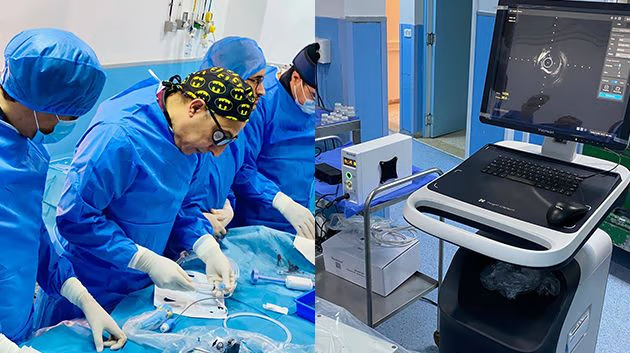
The interventional cardiology department of Charles-Nicolle University Hospital has reached an important milestone. Dr. Habib Ben Ahmed, head of the cardiac catheterization lab, announced the success of the first procedures in Tunisia using intravascular lithotripsy (IVL) — a shockwave technique specifically designed to fragment calcifications in the coronary arteries.
What is intravascular lithotripsy (IVL)?
IVL is a cutting-edge technique that uses a balloon fitted with low-energy shockwave emitters. These targeted pulses break up the calcium deposits embedded in the arterial wall, making it possible to dilate the artery effectively and safely before a drug-eluting stent is placed. Unlike more aggressive methods, IVL preserves healthy tissue and reduces the risks associated with the procedure.
Two successful procedures: proof of local expertise
According to Dr. Ben Ahmed, two operations were performed successfully, including one on an 82-year-old female patient with severe coronary calcifications. Both procedures went ahead without notable complications, demonstrating the team’s technical and logistical mastery (interventional cardiologists, anesthesiologists, and specialized nurses).
- Insertion of a catheter fitted with a special balloon up to the lesion.
- Activation of shockwaves to fragment the calcification.
- Placement of a drug-eluting stent to restore and stabilize blood flow.
Get a price estimate for your surgery!
Clinical advantages and patient benefits
Introducing IVL in a Tunisian public hospital offers several benefits: reduced intra-procedural risks, improved stent implantation success in heavily calcified arteries, and the possibility of offering a suitable treatment option to elderly or multimorbid patients who previously would have had to resort to riskier techniques or transfers abroad.
Current limitations: cost and availability
Despite its effectiveness, IVL remains an expensive technology. Dr. Ben Ahmed pointed out that Tunisia currently has only about four devices capable of performing this procedure. This scarcity slows the technique’s spread nationwide and requires usage to be prioritized in the best-equipped centers.
Why do coronary calcifications pose a problem?
Calcifications make the arterial wall rigid, complicating balloon expansion and stent placement. They are more common in older patients and in those with risk factors such as diabetes, chronic kidney failure, high cholesterol, or hypertension. Effectively treating these lesions reduces the risk of treatment failure and subsequent cardiovascular events.
Possible impacts for Tunisian cardiology
- Strengthening the public sector’s capacity to deliver high-level care.
- Training opportunities for Tunisian interventional cardiologists.
- Potential to expand access through partnerships, funding, and national programs.
- Stimulating clinical research and local protocols adapted to Tunisian patient profiles.
Outlook
The success of these first procedures could encourage other centers to acquire the equipment and train their teams. For IVL to become more accessible, coordinated efforts will be needed: public investment, dialogue with manufacturers on affordable cost solutions, and ongoing training plans. Clinically, the gradual integration of IVL will enrich the therapeutic arsenal against complex coronary lesions.
The success of the first IVL procedures at Charles-Nicolle Hospital is a major advance for interventional cardiology in Tunisia. It shows that the public hospital can adopt cutting-edge international technologies for the benefit of patients. Despite the financial and logistical challenges, this breakthrough opens a promising horizon for the management of complex coronary disease in the country.