
Tunisian Engineers Develop a Portable Device for Remote Medical Analysis
16 Sep
Tunisian Engineers Develop a Portable Device for Remote Medical Analysis
In a world where technology is revolutionizing every field, medicine is no exception. In recent years, telemedicine has taken on a growing role, especially with the rise of artificial intelligence (AI) and the need to limit patient travel, particularly during the Covid-19 pandemic. In this context, a team of Tunisian engineers has just made a major breakthrough by developing an innovative portable device for remote medical analysis.
A revolutionary device serving health
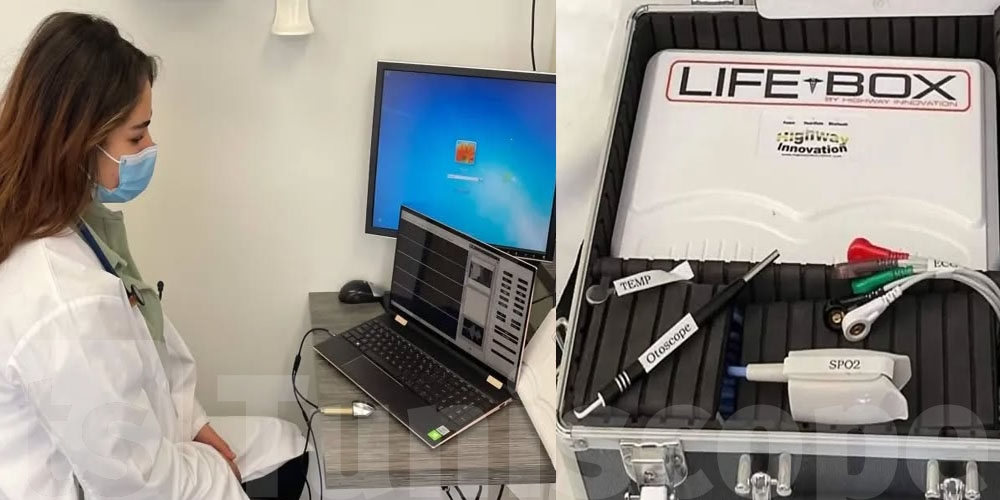
The compact, easy-to-carry device is designed to let doctors and medical teams perform basic clinical examinations without the patient having to be physically present at the hospital or medical center. Thanks to the integration of artificial intelligence, it does not merely collect vital data; it can also analyze it in real time and provide a reliable preliminary diagnosis.
In practice, the device measures parameters such as heart rate, blood pressure, blood oxygen level, body temperature, and respiratory activity. Once captured, this information is processed by powerful algorithms capable of detecting anomalies and immediately alerting the treating physician.
Get a price estimate for your surgery!
Fill out the form below quickly.
A Tunisian innovation recognized internationally
The result of several years of research and prototyping, this project has not gone unnoticed. The device has already won several technological innovation awards, notably at international competitions specializing in digital health. Its potential is such that it is currently being tested in collaboration with hospitals in Canada and the United Kingdom.
This international recognition illustrates not only the value of the innovation but also the growing strength of Tunisian engineering in the field of medical technology. Tunisia, often cited for its software development skills, once again demonstrates its ability to compete on the world stage.
A response to the challenges of modern medicine
One of the main challenges facing the global health system is ensuring fast and equitable access to care. In many countries, particularly in rural or remote areas, patients have to travel long distances to see a doctor or have tests done. The device designed by these Tunisian engineers addresses this problem perfectly.
By making it possible to carry out first-line medical analyses at home or in local centers, it considerably reduces the costs and delays associated with transporting patients to hospitals. It also facilitates rapid management of medical emergencies, since detected anomalies are immediately transmitted to healthcare professionals.
Artificial intelligence at the heart of the project
What truly sets this device apart from other existing solutions is its advanced use of artificial intelligence. The built-in algorithms do not simply compare data against predefined thresholds; they learn continuously from the results collected, which improves their accuracy and relevance over time.
For example, a patient with a chronic condition such as diabetes or hypertension can be monitored regularly using the device. The AI identifies not only isolated deviations but also long-term trends, making it possible to anticipate complications before they occur.
Multiple benefits for patients and doctors
For patients, the main advantage lies in simplicity and comfort: no more frequent travel, hours spent in waiting rooms, or costly examinations. The device brings medicine to their homes, with reliable results and continuous follow-up.
For doctors, it is a valuable tool that facilitates decision-making. With a centralized dashboard, they can track their patients' health in real time, prioritize urgent cases, and adjust treatments based on the data received. This system also eases the burden on often overcrowded hospitals by reducing the number of non-essential in-person consultations.
Outlook and challenges ahead
Although this Tunisian innovation raises high hopes, it still has to pass certain stages before large-scale commercialization. The tests under way in Canada and the United Kingdom will make it possible to assess its effectiveness in a variety of care settings and to obtain the necessary medical certifications.
On the other hand, the issue of medical data protection remains crucial. Like any connected technology, the device must guarantee optimal security to prevent leaks or hacking of sensitive information. The engineers say advanced encryption protocols are already built in, but regular audits will be essential to reassure users.
A source of national pride and a step toward the future
Beyond its medical benefits, this project is a source of immense pride for Tunisia. In a country where young engineers and researchers are full of talent but sometimes struggle to bring their ideas to life, this success is an inspiration. It proves that “made in Tunisia” innovation can find its place in the global market and help solve universal health challenges.
In the long term, the designers plan to expand the device's functionality to include other biological analyses, such as the early detection of certain infections or the monitoring of neurological parameters. This development would pave the way for even more comprehensive and personalized medical follow-up.